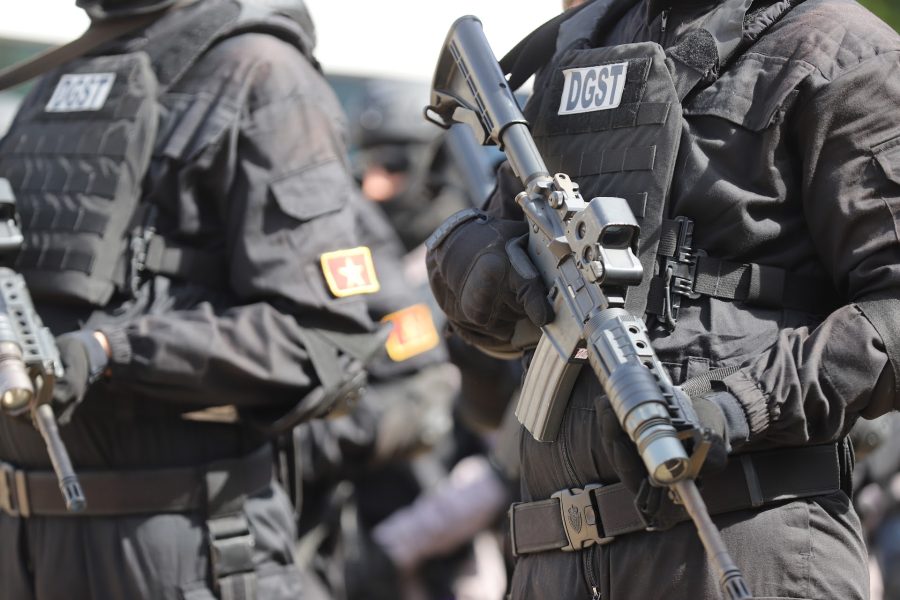
Morocco’s strategic position at the crossroads of Africa, Europe, and the Arab world makes it a key pillar of regional stability, but it also places the country in the crosshairs of terrorist groups seeking expansion, according to a recent report by Modern Diplomacy.
The report, titled “Why Does Daesh in the Sahel Consider Morocco a Key Target?”, states that terrorist organizations, including the Islamic State in the Greater Sahara (ISGS), factions of the Group for Support of Islam and Muslims (GSIM), Boko Haram, and Al-Qaida in the Islamic Maghreb (AQIM), view Morocco as a major obstacle to their objectives.
Beyond regional disruption, these groups see Morocco as a critical target due to its role in strengthening Europe’s defenses against transnational terrorism. The report highlights that Morocco’s strong security cooperation with Spain, the United States, and France has been instrumental in dismantling terror cells and preventing attacks.
Since 2002, Moroccan authorities have dismantled more than 200 terrorist cells, many with ties to jihadist networks in the Sahel-Sahara, Syria, and Iraq. The country has solidified its role as a key player in counterterrorism through advanced intelligence, counter-espionage operations, and rigorous network analysis, the report noted.
Morocco’s efforts extend beyond border security, as it works closely with Sahel nations and Western allies to disrupt jihadist networks. The country’s intelligence capabilities, border control measures, and aerial surveillance have significantly reduced the transit of foreign fighters from the Maghreb to the Sahel, according to the report.
The report also underscores Morocco’s influence in the political and diplomatic spheres, promoting a dual security and development strategy to stabilize the Sahel region. Through economic aid and humanitarian efforts, Morocco has diminished the appeal of jihadist groups among vulnerable communities while also cracking down on terrorist financing networks in its southern provinces, as well as in Mauritania and Mali.
The North African nation employs a hybrid counterterrorism strategy that integrates intelligence, diplomacy, and economic development. It has modernized its surveillance systems and promotes a moderate interpretation of Islam to counter extremist ideologies.
According to the report, Morocco has become both a target and a leading force in regional security, employing a robust defense doctrine that enhances national security, strengthens strategic alliances, and integrates cutting-edge surveillance, inter-agency coordination, and counter-hybrid threat mechanisms.
Moroccan security forces continue to modernize with advanced technology, intelligence systems, and cyber-surveillance to preempt and neutralize emerging threats. Its international partnerships with the U.S., the European Union, and African nations reinforce its role as a global security provider.
Additionally, Morocco plays a key role in training Sahelian forces under the United Nations Counter-Terrorism Office in Rabat. Its participation in multilateral initiatives, such as the Focus Africa Group, has been crucial in dismantling jihadist networks and addressing transnational threats.
The report concludes that Morocco’s integrated security approach has made it a resilient bastion against terrorism, a model of adaptability in the face of evolving challenges, and a strategic partner of the U.S. and Europe in safeguarding the Atlantic Alliance’s southern flank and managing migration flows.



add your comment
Terms of publication : Not to offend the writer, people, sacred things, or attack religions or the divine self, and refrain from racist incitement and insults.